Greta Baumann · 2 September 2026
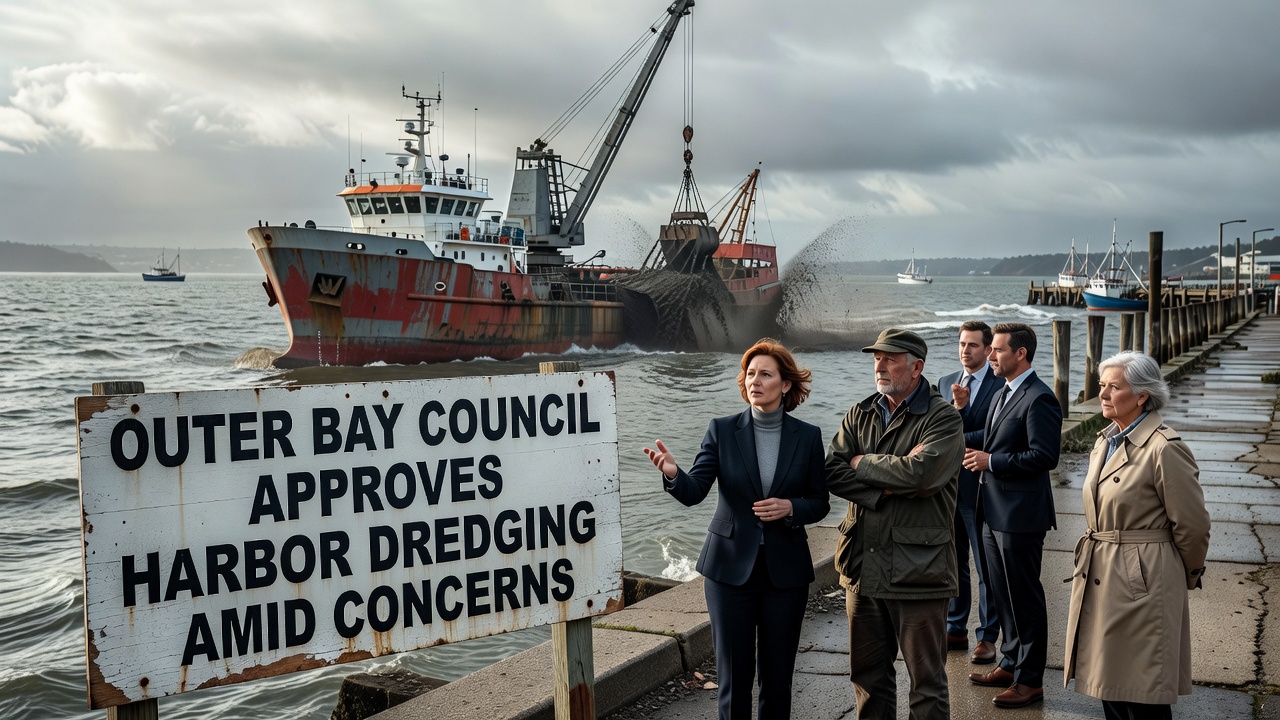
The Outer Bay City Council voted 5-2 on Tuesday to approve a major harbor dredging project aimed at improving navigation and supporting local maritime commerce. The decision follows months of public hearings and environmental reviews, with officials emphasizing economic benefits while acknowledging ongoing concerns from conservation groups.
Project Scope and Expected Benefits
The approved plan calls for deepening the Outer Bay harbor channel to 42 feet over a 3.2-mile stretch, removing approximately 1.8 million cubic yards of sediment. Project engineers estimate the work will take 14 months and cost $48 million, funded through a combination of state grants, port authority bonds, and federal matching funds. Proponents argue the dredging will allow larger cargo vessels to access the port, potentially increasing annual throughput by 22 percent and supporting 1,400 jobs in shipping, logistics, and related industries. Council members noted that current channel depths have forced some vessels to lighter loads or divert to competing ports, resulting in lost revenue estimated at $6 million annually.
Construction is scheduled to begin in early spring, with sediment disposal directed to designated upland sites and a confined aquatic disposal cell. The project includes monitoring protocols for water quality during operations, and contractors must adhere to seasonal restrictions to minimize impacts on fish migration. City staff presented data showing that similar dredging efforts in neighboring bays have maintained or improved navigation safety without long-term ecological degradation when best management practices are followed.
Environmental Objections and Mitigation Measures
Environmental organizations, including the Outer Bay Coastal Alliance and regional chapters of national conservation groups, voiced strong opposition during the approval process. Critics highlighted risks of resuspending contaminants in legacy sediments, potential harm to eelgrass beds, and increased turbidity affecting shellfish beds and juvenile fish populations. A coalition letter submitted to the council cited studies from comparable projects indicating temporary spikes in heavy metals and reduced dissolved oxygen levels during active dredging phases.
In response, the council incorporated additional safeguards into the final permit, including real-time water quality sensors, expanded pre- and post-dredge benthic surveys, and a $2.1 million habitat restoration fund for nearby wetlands. Officials stressed that the project complies with all state and federal environmental regulations and that independent oversight will continue throughout construction. Councilor Elena Vargas, who supported the measure, stated that economic needs must be balanced with environmental stewardship, while dissenting members called for further independent review before proceeding. The approved project now moves to state permitting agencies for final authorization.